What is a filament painting?
Updated 28 October 2026 · 4 minute read
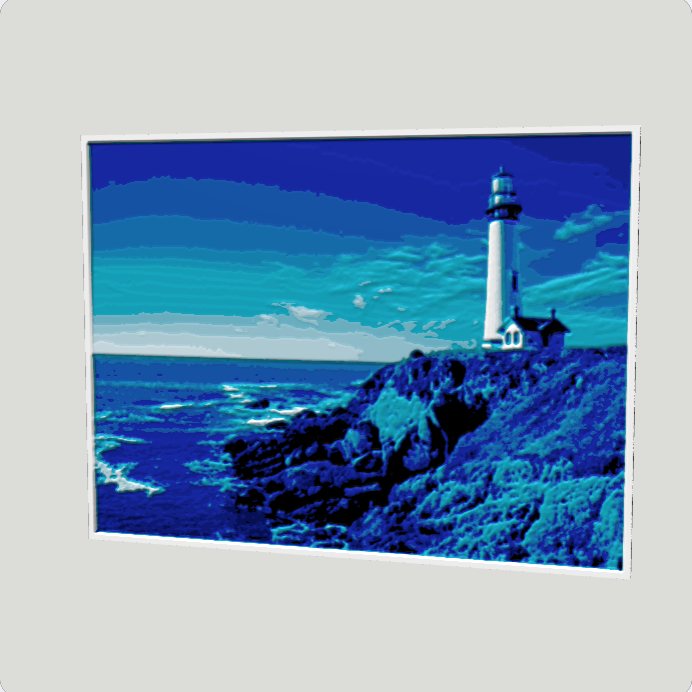
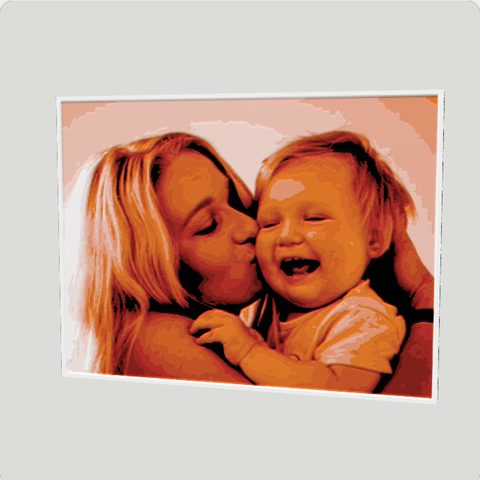
A filament painting is a thin picture 3D printed in layers of coloured plastic filament. Each layer is slightly see-through, so colours stacked at different heights blend into each other and recreate your photo in smooth colour, seen in everyday light.
Where the technique came from
3D printers usually print in one colour at a time, so for years most prints were a single solid colour. Makers then noticed that very thin layers of plastic let light through, and that a colour printed on top of another tints it rather than hiding it.
The idea took off with software called HueForge, which works out how thick each colour needs to be to recreate an image. That’s why you’ll often see filament paintings called HueForge prints. Our studio uses the same principle, tuned for the filaments we stock.
How a filament painting works
- Brightness becomes height. The painting is a thin relief where brighter parts of the photo stand a little taller. The whole picture is only about 2 mm thick.
- Colours change with height. We print in 0.08 mm layers and switch filament at set heights, usually from the darkest colour at the bottom to the lightest at the top.
- Thin layers blend. Every filament lets some light through until it reaches a certain thickness. A few thin layers of a light colour over a dark one give an in-between shade, so four filaments make a smooth range of tones.
- Planned to the layer. Our studio measures how see-through each filament is and works out the best heights for your photo, and the preview shows exactly where each colour lands.
Choosing colours
- Greyscale. Black, grey, silver and white: a classic look for portraits and pets.
- Eleven colour palettes. Each runs from black to white with two colours between, so your photo keeps its full contrast: Sepia, Ocean, Lavender, Crimson, Ember, Emerald, Twilight, Orchid, Mocha, Lagoon and Sage.
- Auto match. We pick the four filaments closest to your photo’s own colours.
- Choose your own. Pick from one to four colours from our range, in the order you’d like them to rise.
Which photos work best?
- Bold light and dark. Landscapes, skies, seascapes, silhouettes and high-contrast portraits.
- Simple compositions. The colours follow the photo’s brightness, so a clear subject reads best from across a room.
- Bigger for busy photos. Details smaller than about 1 mm blend together, so choose a larger size for a detailed scene.
How to display a filament painting
- Everyday light, from the front. It looks good on a shelf, a picture ledge or a desk without any lamp.
- Away from sun and heat. It’s printed in PLA plastic, which can soften with warmth, so keep it out of direct sunlight and away from radiators, heaters and other sources of heat.
- Easy to clean. Dust it with a soft dry brush.
Questions
- What is a filament painting?
- A thin picture 3D printed in layers of coloured filament. The layers are slightly see-through, so colours stacked at different heights blend into each other and recreate your photo in everyday light.
- Is it the same as a HueForge print?
- Yes, it's the same technique. HueForge is the name of the software that made it popular, so you'll often see filament paintings called HueForge prints.
- How many colours does a filament painting use?
- Up to four. Thin layers of each colour let the ones below show through, so four filaments blend into many more shades.
- How thick is a filament painting?
- About 2 mm, so it's nearly flat to the touch. The colour comes from the layers, not from deep carving.
- Which photos make the best filament paintings?
- Bold scenes with clear areas of light and dark: landscapes, skies, seascapes, silhouettes and portraits with strong contrast.
- Does a filament painting need a light behind it?
- No. It's made to be seen from the front in everyday light, on a shelf, a picture ledge or a desk.
See your photo as a filament painting
Upload a photo and compare palettes in the 3D preview. Paintings from £15.
Try it with your photoKeep reading: our filament paintings · What is a photo relief? · What is a lithophane?