What is a lithophane?
Updated 23 October 2026 · 5 minute read
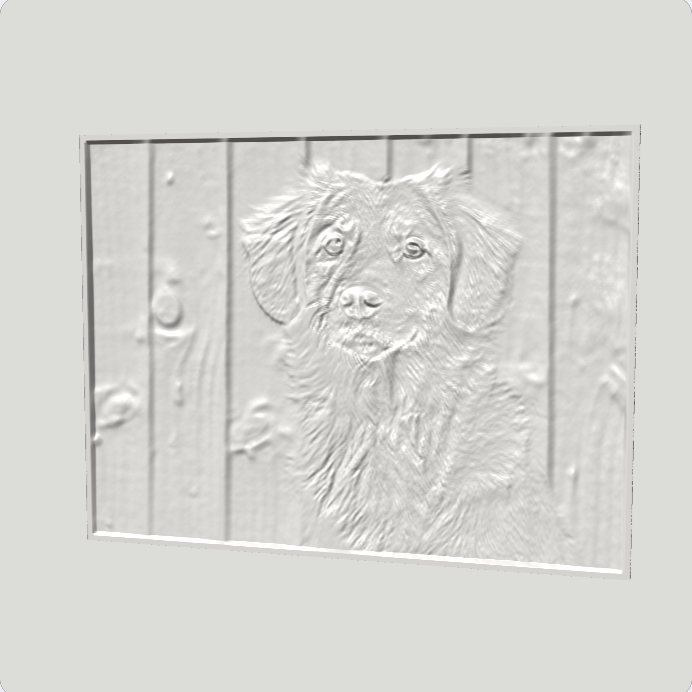
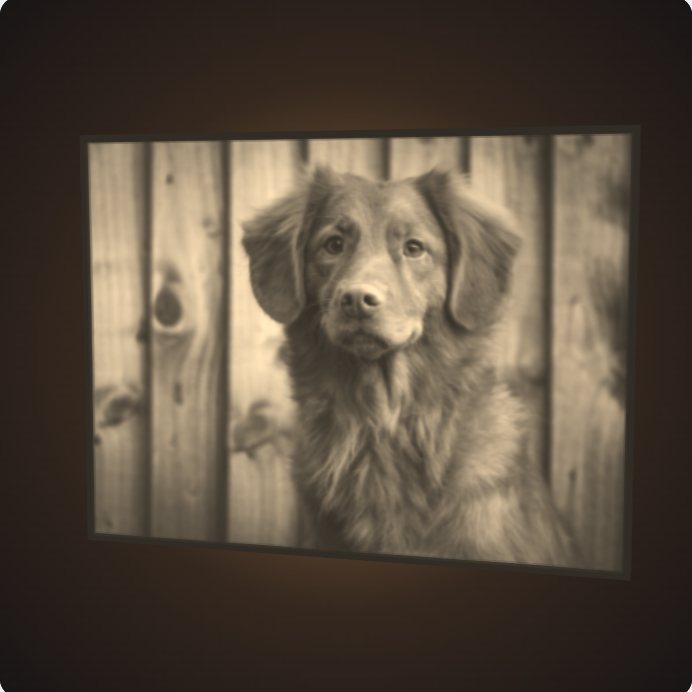
A lithophane is a thin panel with a picture carved into its thickness. In daylight it looks like a plain white relief. Shine a light through it from behind and the thin parts glow while the thick parts stay dark, so a detailed, almost photographic image appears.
Where the name comes from
The word joins two Greek words: lithos, stone, and phainein, to cause to appear. It describes the effect well: a picture that appears out of what looks like a piece of carved stone.
A short history
Lithophanes were invented in France in the 1820s. Baron Paul de Bourgoing patented the technique in 1827, and the first pieces were made at a pottery in Rubelles, south-east of Paris. Chinese potters had long used a related idea, faint designs carved into thin porcelain that show when held up to the light, but the detailed pictures we call lithophanes are a European invention.
Germany soon became the centre of production. The royal porcelain factory in Berlin (KPM) made so many that in England they were known as “Berlin transparencies”, and Meissen, which began making them in 1829, produced tens of thousands by the middle of the century. In England, Minton, Copeland and Grainger’s of Worcester made them under licence.
They were at their most fashionable from around 1840 to 1870, used as lampshades, nightlights, tea warmers, candle screens and window panels. Every scene had to be carved by hand, first in wax on a sheet of glass so the carver could hold it up to a light and check the picture, then cast in plaster to make a mould for the porcelain.
By 1900 they had largely fallen out of fashion, although some later pieces are well known, such as Japanese tea sets from the years after the Second World War, with a face that appears in the bottom of each cup. The largest collection in the world is held by the Blair Museum of Lithophanes in Ohio.
How 3D printed lithophanes work
3D printing brought lithophanes back, because a computer can turn any photo into the right shape in seconds. The idea is the same as in the 1820s: thickness controls how much light gets through.
- Each spot’s brightness sets its thickness. Our panels run from about 1 mm in the brightest highlights to about 3.2 mm in the darkest shadows.
- White plastic diffuses the light. We print in white SUNLU PLA+, which spreads the light evenly so the picture looks smooth rather than grainy.
- Fine layers keep the detail. Our flat panels print standing upright in 0.12 mm layers, so the carving across the picture is as fine as the printer can make it.
- A border adds strength. An optional 2 mm frame stiffens the edges and makes it look neat on a shelf.
Because the picture is made of light and shade, a lithophane shows in tones of one colour. A colour lithophane adds very thin layers of cyan, magenta and yellow behind the white, which tint the light as it passes through.
Lithophane or printed photo?
A printed photo looks the same all day. A lithophane changes: a quiet white carving in daylight, then a glowing picture in the evening when the light comes on. That’s why they’re popular as night lights, memorial pieces and gifts for people who already have plenty of framed photos.
How to light a lithophane
- Behind, and close. The light needs to come through the panel, so place it directly in front of a lamp, an LED stand or a bright window.
- Even light looks best. A diffused LED or a lampshade gives a smooth picture; a bare bulb can leave a bright spot.
- Warm or cool. Warm white gives the classic golden glow of the Victorian originals; cool white looks crisp and modern.
- LED only. Never use a real candle or a hot bulb right against the plastic.
Can I make my own?
If you own a 3D printer, free lithophane maker tools will turn a photo into a printable file, and there’s plenty of help online for getting the settings right. If you don’t, or you’d like it done for you, our 3D studio shows a lit preview of your own photo in a few seconds, free, and we print and post the finished lithophane.
Questions
- What does lithophane mean?
- It comes from the Greek lithos, meaning stone, and phainein, meaning to cause to appear: a picture that appears in stone. The first ones were made in porcelain.
- Why does a lithophane look blank in daylight?
- The picture is held in the thickness of the panel, not printed on its surface. With light falling on the front you see a pale relief; with light coming through from behind, thin areas glow and thick areas stay dark, so the photo appears.
- What light is best for a lithophane?
- An even light directly behind it: an LED light stand, a lamp or a bright window. Warm white gives the traditional golden glow and cool white looks crisp. Use LED light rather than a real candle.
- Are 3D printed lithophanes as detailed as porcelain ones?
- A well printed lithophane in fine layers shows faces, fur and text clearly from normal viewing distance. Up close you can see faint printing lines, which disappear when it's lit.
- Can a lithophane be in colour?
- Yes. A colour lithophane adds thin layers of coloured filament behind the white carving, so the light picks up the colours of your photo as it passes through.
- Can I make a lithophane from any photo?
- Almost any. Close-up faces and pets with clear light and shade work best; very dark or very busy photos lose detail. Our studio shows you a lit 3D preview of your own photo for free, so you can check before ordering.
See your photo as a lithophane
Upload a photo and switch the light on and off in the 3D preview. Flat panels from £12.
Try it with your photoKeep reading: our photo lithophanes · What is a photo relief? · What is a filament painting?